01 · LEARNING & MEMORY
Grow through experience.
Work toward intelligence that builds on what it has learned, remembers useful experience and applies that knowledge in new situations.
BEYOND BRUTE FORCE · SOFTWARE BUILT AROUND REUSE
Useful structure deserves to do more than one job. Beyond Brute Force develops software that carries it forward: keeping files compact, completing supported AI-workflow operations locally, and reconstructing rich interactive worlds from compact seeds and saved world changes.
Start with GLYX Archive (definition), our free Mac trial. Explore the demonstrations and the wider family below.
THE IDEA BEHIND THE FAMILY
Reuse structure. Create more.
Open the video library · choose a scene
SEE THE IDEA AT WORK
Meet the eight BBF technologies in a 4-minute 48-second film: AI workflows, archiving, retained state, interactive worlds, graphics and learning.
Narrated by Aeternum · Soundtrack: Return Current.
Every time software repeats a job, it uses time and resources. Beyond Brute Force develops software that reuses what is still useful, checks the result, and helps you get more from the storage and computing you already pay for.
Start with the files you keep. Backups and project revisions often contain information you have already saved. GLYX reuses compatible information across an archive while preserving what is needed to recover the exact files. That gives you a way to keep more history in the space available, and reduce storage charges where less billable space is needed. In our exact-repeat test, adding almost two gigabytes again needed less than one megabyte of extra archive and recovery records. Every file came back exactly.
What you keep is only part of the cost. There is also the work your applications send to an AI service. For supported routine operations, TokenHoloFold can interpret the request, do the job locally and check the result. In the recorded test, all three hundred supported requests completed exactly without a model-provider call. If you are paying for that call, removing it removes its charge. It also removes the wait for that remote response. We then count the local running and integration costs to work out what you actually save.
The same principle applies when information changes. If you update one small part of a large dataset, Seed State is designed to keep state that is still valid and update the affected part. For supported work, that can mean less waiting for the new result and more capacity for other jobs. In a recorded graphics-processor study, the measured update step ran about twenty times faster. Finishing that step sooner lets the work after it move forward. The broader goal is more useful work from the hardware and power budget you already have.
Carrying useful information forward also matters in games and simulations. Expanding Worlds explores keeping object identities and a history of what happened, then reconstructing selected state when it is needed. For a game developer, the aim is a world where earlier events still matter when a player returns. For a simulation team, it is the ability to revisit a known state and inspect what changed. Existing prototypes show parts of that direction; the wider platform is still being developed.
A world also has to be drawn. When one object moves, much of the scene may still be usable. Retained Graphics is designed to rebuild the image regions affected by a supported change and check the resulting picture. The aim is more responsive graphics: a shorter wait for a designer to see an edit, or more room for a complex scene within the same rendering budget.
To make systems like these useful, their parts need to fit together. Glyphtronix is the structured foundation for supported operations, their roles, relationships and sources. The aim is to make workflows easier to compose and investigate. When something changes, a developer should be able to trace what depends on it. When a result looks wrong, they need to see where it came from.
And when software says the job is finished, it needs to account for the whole request. Ask for three outputs and receive only two, and the job is still incomplete. Prooftronix is designed to check the required parts and the combined response, making missing or mismatched work visible before somebody relies on it. Catching that gap earlier can prevent it becoming rework or a bad decision further down the line.
Those questions about context, evidence and completion also shape Cog, which is coming soon and still in training. We are developing it to keep possible answers connected to their sources and supporting information. The aim is to make it clearer why a response is supported, where it came from, and what still needs checking. This is the research direction we are working towards.
Across the eight technologies, the practical questions stay the same. Can you keep more useful history? Get the result sooner? Remove an avoidable charge? Know whether the job is complete? We compare the relevant product with the best practical alternative for your workload, counting the full result and the full cost. Beyond Brute Force. Reuse structure. Create more.
YOUR FILES · YOUR LOCAL ARCHIVE
THE PRODUCT YOU CAN TRY TODAY
Backups, related documents and successive project versions often contain information you have already saved. GLYX Archive can reuse compatible information inside your archive and retain what is needed to recover each original file exactly.
Add files, inspect your archive and recover the files you choose. The current Mac release keeps archive contents local; no shared public hub is enabled.
Apple silicon · macOS 26 or later. No automatic subscription or trial charge. Keep your archive recovery key backed up privately.
An optional £4.99 monthly plan is available for one supported Mac after activation. The free trial never charges automatically. A browser edition is planned. See availability →
Paid writing needs an online permission refresh at least every ten minutes. Compatible archive recovery stays free and offline with the matching GLYX Recovery app and archive key.
MEET THE FAMILY
Start with the job you want done. These four groups show where each technology fits, what it offers and its current stage.
Keep information. Handle change.
RETAINWho this is for
Where it could fitPersonal and project archives, document management, versioned records and storage-software integrations.
Compression that builds on what you’ve saved.
Grow your archive’s reusable foundation. Later matching files can need dramatically fewer new bytes—so you keep more files and history, with exact recovery.
Free Mac trial availableExplore GLYX Archive UPDATE
Who this is for
Where it could fitCloud and data-centre software, repeated computation, industrial edge systems and stateful applications.
Keep useful state. Focus the next update.
Build on state that is still valid and update the parts your application needs after a change.
Integration programmeExplore Seed State OSDo the job. Build understanding.
 EXECUTE
Who this is for
Where it could fitAI services, enterprise software and recurring structured workflow processing.
Keep the model. Remove eligible round trips.
Complete supported structured tasks locally, check the result and remove the provider call for those operations.
Workflow evaluationsExplore TokenHoloFold LEARN
Who this is for
Where it could fitResearch into adaptive assistants, learning agents, persistent context and capable robots.
Learning that keeps its sources in view.
Follow our research into language, learning and retained context, built on BBF technology.
Training in progressExplore CogniGlyphonixBuild a world. Produce its view.
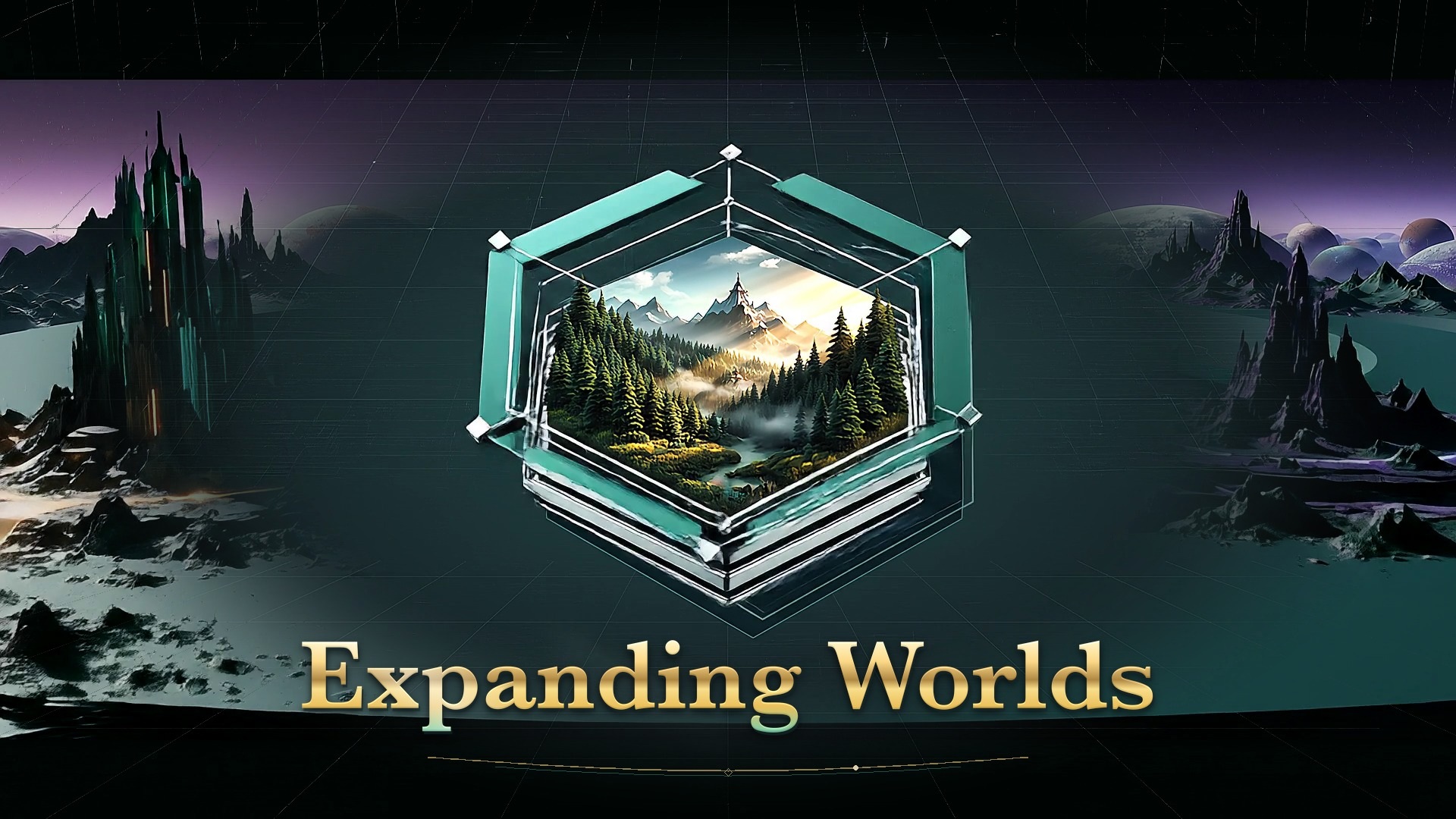 EVOLVE
Who this is for
Where it could fitGames, connected virtual environments, industrial twins and interactive training simulations.
Expansive worlds. Compact foundations.
Explore seed-generated scenes, animated creatures and linked or nested world designs that reuse their foundations and reconstruct requested detail.
Visual prototypesExplore Expanding Worlds SHOW
Who this is for
Where it could fitGaming, animation, design, engineering visualisation and interactive digital twins.
Keep the scene. Reconstruct the view.
Explore detailed scenes, animation and selective updates for games, visualisation and digital twins.
Visual demonstrationsExplore HoloRendererRepresent relationships. Check the result.
 REPRESENT
Who this is for
Where it could fitDeveloper tools, structured code and data interchange, workflow composition and simulation interfaces.
Represent once. Carry useful work further.
Connect compatible languages, reuse structured work and explore smaller transfers with local reconstruction—so your applications can do more with what they already share.
Foundation technologyExplore Glyphtronix CHECK
Who this is for
Where it could fitSoftware testing, enterprise automation, traceable workflows and result-checking tools.
Catch missing work before it becomes rework.
Check every required part and the actual combined answer in supported workflows. Make omissions and failed conditions visible before release.
Foundation technologyExplore ProoftronixA family of complementary technologies, each with its own evidence and development stage. The role map shows how they fit conceptually; a combined deployment is scoped and evaluated for the actual workload.
EXPANDING WORLDS · BUILT AROUND BYTE AVOIDANCE
Seed-generated scenes, distinctive animated creatures and interactive environments built from reusable foundations. Explore linked and nested world designs that reconstruct the detail needed for the current view or interaction.
Keep useful foundations available, describe the differences, and rebuild what is requested. For developers, the opportunity is varied content and lighter compatible updates, with the result checked at the receiver.
Explore Expanding Worlds ↗462 B average packet represented 531,278.5 B of expanded content; all 48 compared frames matched.
Recorded compatible-content study. Shared runtime and assets retained at the receiver; packet bytes are separate from the complete running application.
See the bytes and comparison →TokenHoloFold’s 20 October study completed 300 supported data tasks exactly and handled 100 separate boundary controls safely. On 237 tasks exact in both routes, complete-process median time was 10.61× faster than the tested one-call API route.
Compare API and conventional local routes →Matched 4.080 GB growing collection, including repeated inputs: complete recorded recovery kits of 1.333 GB for GLYX and 3.749 GB for ZIP. All 1,171 entries restored exactly in both arms. This historical engine study is separate from the current encrypted desktop package; savings on your own files depend on their reusable structure.
See the inputs and full comparison →THE WORK BEHIND THE PORTFOLIO
Five new applications were filed on 27 October 2026, joining the earlier three. All eight are pending. Explore the technology and recorded work behind each application.
MEET THE FOUNDER

BEN VIVIAN
Founder & inventor
I want to build intelligence that can learn, remember and work usefully in the world.
I’m Ben Vivian. Over the past twenty months, I’ve been turning investigations into reusable structure, computation and learning into software, prototypes and a family of technologies. Beyond Brute Force is where that work comes together.
What drives me is the possibility of exceptionally capable robots and assistants: machines that can build on experience while operating with far less unnecessary computation. My investigations into physics, mathematics and language are how I began exploring those building blocks.
Read my story →COMPANY VISION · OUR LONG-TERM GOAL
Our ambition is practical, deployable artificial general intelligence: systems that can learn from experience, retain useful knowledge and help with varied tasks while operating from compact structured state.
01 · LEARNING & MEMORY
Work toward intelligence that builds on what it has learned, remembers useful experience and applies that knowledge in new situations.
02 · LIGHTWEIGHT OPERATION
Develop compact representations, shared reusable information and selective reconstruction so future systems can do useful work with smaller active computing demands.
03 · PRACTICAL CAPABILITY
Our long-term direction reaches from capable personal assistants to robots that can learn and work usefully alongside people.
THE OPPORTUNITY · ACROSS INDUSTRIES
Our target applications extend from personal computers and phones to AI infrastructure, data services, robotics, vehicles, industrial systems and connected devices. Each integration starts with the capabilities and requirements of that particular system.
Behind this direction is a growing research library exploring physics, observer models, mathematical questions, symbolic language, memory and learning. The games and expanding worlds began as computational testbeds for those ideas.
Explore the research origins →The eight-technology family is the foundation we are developing toward that goal. Explore the products, demonstrations and recorded results to see the work already achieved.
GO DEEPER · PRODUCT PRESENTATIONS
Choose a technology. Explore its practical role, examples and recorded work in a twelve-slide presentation, then watch its available product explainer or introductory chapter.
Who this is for
Where it could fitAI services, enterprise software and recurring structured workflow processing.
Complete supported structured operations locally and return a checked result to the wider AI workflow.
Application GB2623308.0 · Pending
Who this is for
Where it could fitPersonal and project archives, document management, versioned records and storage-software integrations.
Compression that builds on what you’ve saved. More reusable structure can make later matching additions far smaller—giving you more room for files and versions, with exact recovery.
Application GB2624952.4 · Pending
Who this is for
Where it could fitCloud and data-centre software, repeated computation, industrial edge systems and stateful applications.
Reuse applicable working state so supported operations can focus on the changes that matter.
Application GB2624953.2 · Pending
Who this is for
Where it could fitGames, connected virtual environments, industrial twins and interactive training simulations.
Create varied animated creatures and linked or nested environments from compact seed data, reconstructing the detail needed for play or inspection.
Application GB2625572.9 · Pending
Who this is for
Where it could fitGaming, animation, design, engineering visualisation and interactive digital twins.
Carry useful scene information forward and reconstruct the view or supported image regions needed after a change.
Application GB2625573.7 · Pending
Who this is for
Where it could fitDeveloper tools, structured code and data interchange, workflow composition and simulation interfaces.
Carry reusable structured work across compatible software tools. Explore the language bridge, compact-transfer results and represented-throughput research.
Application GB2625574.5 · Pending
Who this is for
Where it could fitSoftware testing, enterprise automation, traceable workflows and result-checking tools.
Give AI and automation teams a clearer completion check: required outputs, supporting evidence and the actual combined answer, with a record reviewers can trace.
Application GB2625576.0 · Pending
Who this is for
Where it could fitResearch into adaptive assistants, learning agents, persistent context and capable robots.
Investigate source-backed learning and how learned relationships apply when the surrounding context changes.
Application GB2625577.8 · Pending
ONE PORTFOLIO · FLEXIBLE COMBINATIONS
Combine the BBF technologies that fit your workload: AI workflows, archives, retained state, changing worlds, rendering, structured representation, checked execution and learning research. Discuss the right products and a complete evaluation by email.
Compare products & licences ↗THE LATEST FROM BBF
Product milestones, company updates and the direction ahead. Follow what has happened and what is still being developed.
OUR TECHNOLOGY ECOSYSTEM
Explore our Google Cloud listing, Apple Developer membership and Microsoft Store publisher-account progress.
Partner Finder
Beyond Brute Force Systems Limited is listed in Google Cloud Partner Finder.
View our Google Cloud profileOur organisation is enrolled and the Store distribution certificates have been issued. We’re preparing GLYX for Mac App Store submission. The direct Mac trial is available now.
Follow our Mac releaseStore publisher account
Our company publisher account is set up and the Apps and games workspace is accessible. GLYX Windows verification and store submission remain ahead.
AI Cloud Partner programme: verification in progress.
Follow our Store preparationSTART WITH YOUR WORKLOAD
Start with one repeated task, growing archive or state operation, a named platform and an agreed outcome. Begin with a non-confidential outline by email. We discuss fit, scope and a written quote before any paid assessment or licence is agreed.
Prepare an email consultation brief → · Explore licensing options →
Email hello@beyondbruteforce.com, or prepare an enquiry below. Review and send it using your email app. Details entered here stay in your browser until you choose to send; start with a non-confidential summary.
Your brief stays on this page. If the form cannot load, email hello@beyondbruteforce.com with a non-confidential summary instead.