
Build on the scene you already have
Reuse retained geometry and scene state when preparing a compatible view, with an evaluation focused on the changes your application makes.
RETAINED SCENES · SELECTIVE RECONSTRUCTION
HoloRenderer is designed to reuse compatible scene information and reconstruct the view affected by a supported change. Explore detailed ships, animated creatures and lighting in BBF’s existing demonstrations, then discuss a comparison with your own rendering pipeline.
Scene and rendering demonstrations · target-engine evaluation by agreement
UK application GB2625573.7 · Pending · Filed 27 October 2026
05 / GRAPHICS
HoloRendererSCENE · DETAIL · LIGHTWATCH THE INTRODUCTION
Product chapter from the BBF portfolio introduction.
00:02:45–00:03:08 in the eight-technology introduction · Narrated by Aeternum. Read the portfolio transcript →
This scene preview stops at the end of the selected chapter. Open the video library to watch from a scene onwards.
WHY IT MATTERS
Reuse retained geometry and scene state when preparing a compatible view, with an evaluation focused on the changes your application makes.
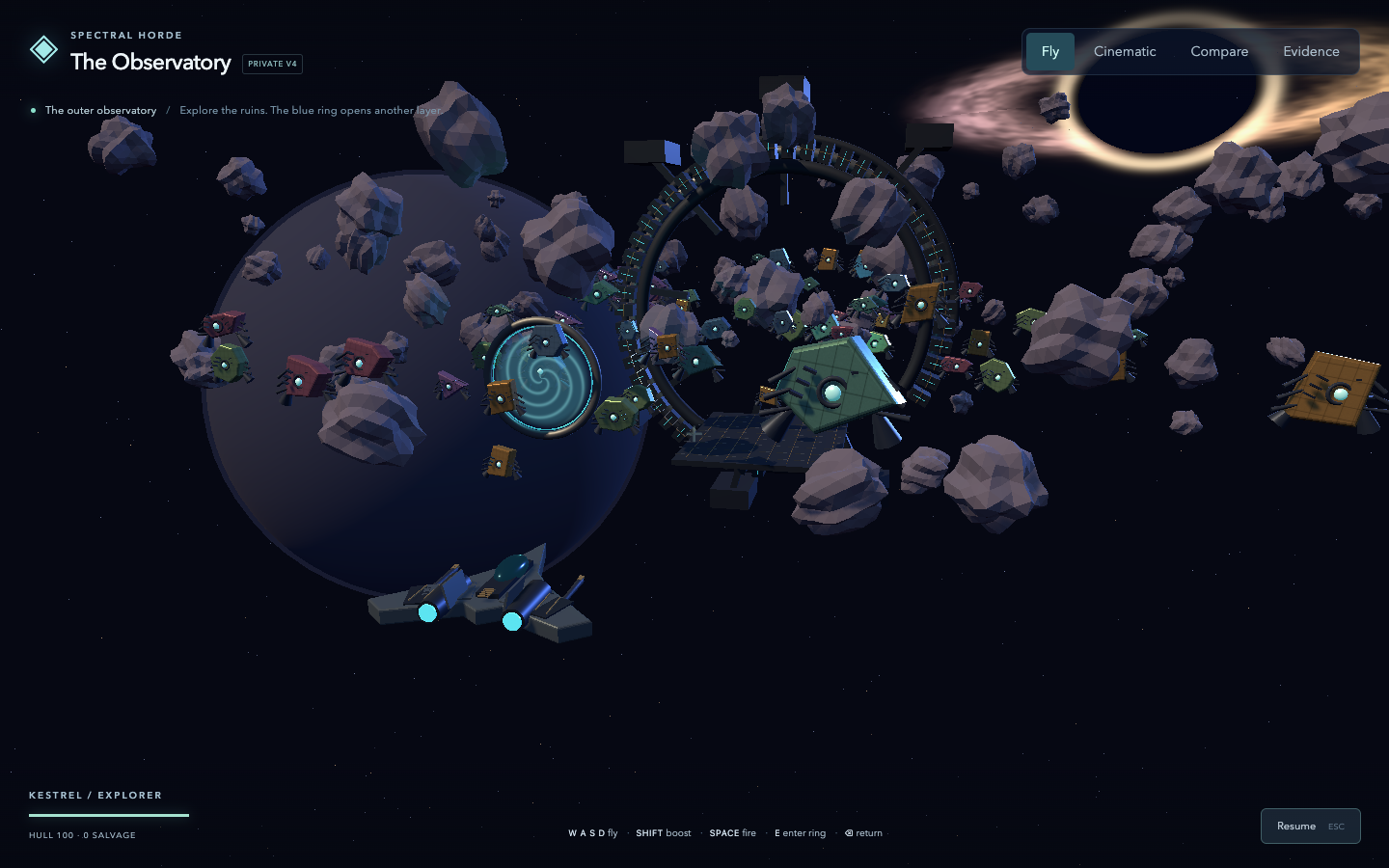
Explore close-up geometry, material variation and lighting in detailed interactive scenes.
Compare the finished image, preparation time and rendering cost together on your target hardware.
HOW YOU COULD USE IT
A designer changes part of a scene or its lighting. Retained content provides the starting point for the next view, while the updated geometry, materials and finished image can be inspected together.
PORTFOLIO INTRODUCTION
Discover how our eight technologies address AI workflows, data, graphics, interactive worlds and learning.
BUILT WITH BBF
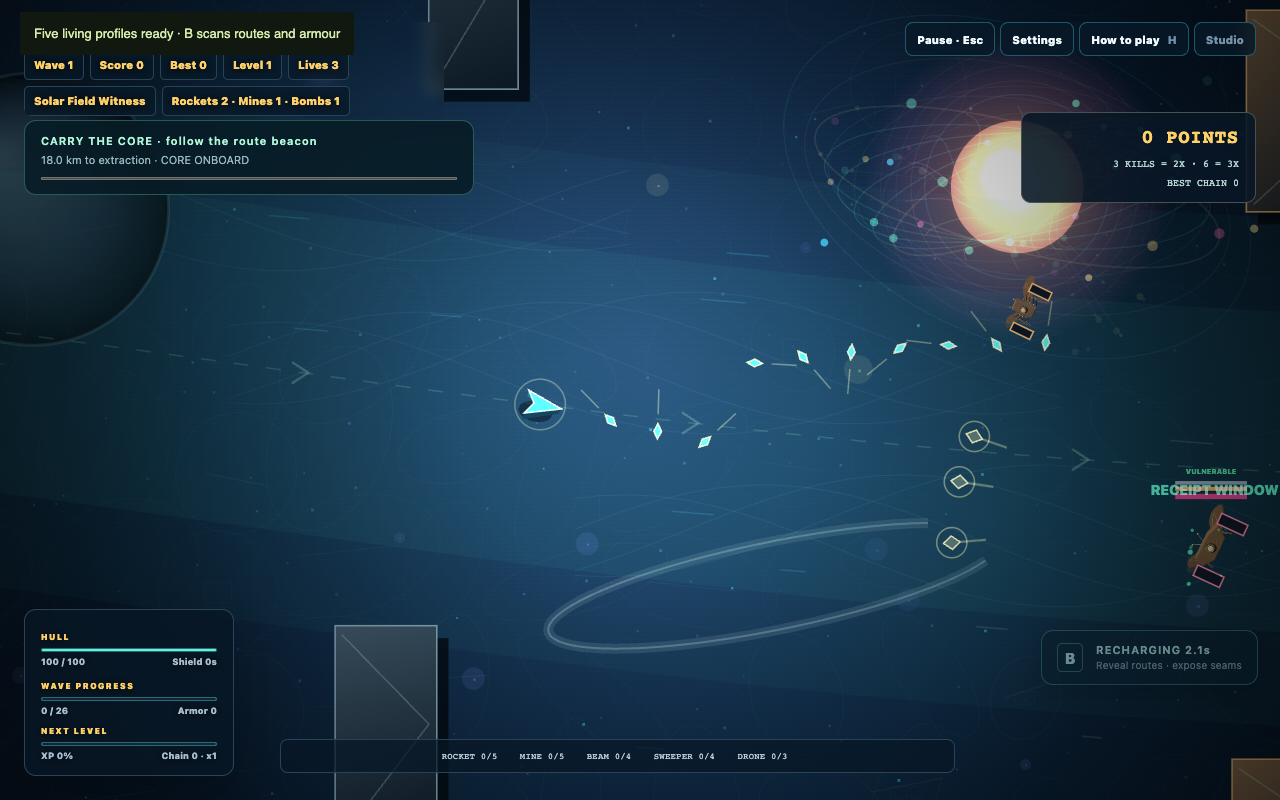
These BBF demonstrations show the visual direction: detailed 3D objects, animated creatures, space environments and playable action.
WHAT THE WORK SHOWS
A related five-run browser study containing 100,000 entities produced matching visual fingerprints across the compared routes. That fixture is separate from a direct HoloRenderer performance comparison. Its 81-byte active-route record excludes the resident runtime and scene rules; the optimised procedural Three.js comparison used 93 bytes and was slightly faster on its narrow draw proxy.
PUT IT TO WORK
Bring a scene with local edits, motion or lighting changes. A targeted evaluation can compare the complete image, update latency, memory and full rendering cost against full redraw and a strong incremental renderer on the same hardware.
Study details and comparisons ↓TEST RESULTS & TECHNICAL NOTES
Review the recorded tests, comparison methods and application-specific evaluation questions.
| Related Brave browser fixture | Recorded result |
|---|---|
| Scale / repetitions | 100,000 entities / 5 runs |
| Visual fingerprints | Matched across compared routes |
| Native active-route state | 81 bytes |
| Optimized procedural Three.js active-route state | 93 bytes |
| Narrow draw proxy | Optimized Three.js was slightly faster |
This browser fixture is adjacent evidence, not a direct Renderer13 throughput test. The films show existing scenes and detail; a matched target-engine study must assess complete frame work, memory, fidelity and cost.
A full redraw and a strong conventional incremental renderer are the relevant next target-application comparisons. The target-engine evaluation measures complete frames, image fidelity, memory and latency on the same hardware.
REQUEST A DEMO OR PAID EVALUATION
Bring an animated scene and your normal rendering pipeline. We’ll scope a paid evaluation around image quality, scene updates and the complete rendering cost on the same target hardware.